A Digital Home for Historical Headwear
client: Dirty Billy's Hats, a Gettysburg-based haberdashery
role: Project Manager, UX, UI, Design
timeline: 9 months
Background
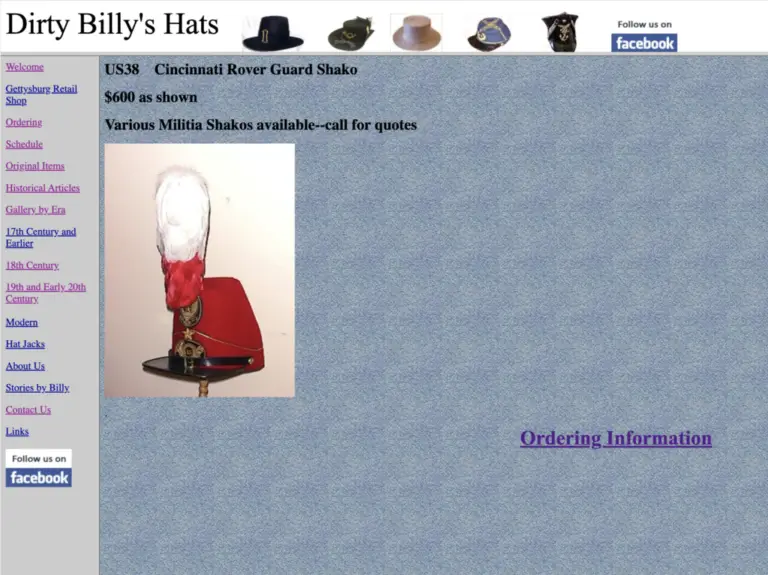
In 2020, as the pandemic forced small businesses to rethink how they reached customers, Dirty Billy’s Hats — a beloved Gettysburg haberdashery known for historically accurate headwear — had no meaningful digital presence. Their existing site directed 100% of purchase inquiries to a phone number, a poorly designed online form, and a Facebook page, with no e-commerce capability and no easy way for the owners to update prices, add products, or run promotions. Building a real online home had become urgent.
Discovery
I spent a day at the store to understand their world firsthand. What I found were two distinct users with fundamentally different needs — and a design challenge I didn’t expect.
Fran, who managed the modern hat inventory, wanted a straightforward e-commerce experience: easy browsing, simple checkout, and the ability to run promotions without needing a developer.
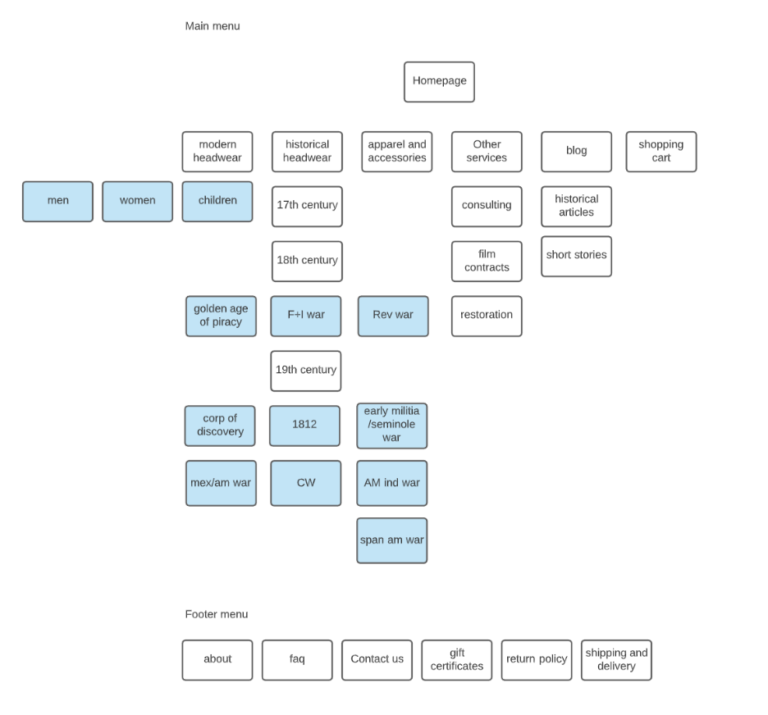
Bill, the craftsman behind the historical pieces, had a more nuanced goal. He wasn’t looking to make historical hats easy to buy online — he wanted to ensure every customer who purchased one understood the historical accuracy behind it. For Bill, a hat worn inauthentically was a problem worth preventing. That meant the design needed two deliberately different flows: a streamlined purchase path for modern hats, and a consultation-first path for historical pieces that routed inquiries through a direct conversation with Bill.
Definition
The project’s objectives were to:
- Replace a phone-and-Facebook-only presence with a fully functional e-commerce platform
- Streamline modern hat browsing and purchasing across all devices
- Create an education-first path for historical headwear that preserved Bill’s consultative sales process
- Give Fran and Bill the ability to independently manage inventory, pricing, and promotions
- Integrate with their existing POS system for a seamless experience across devices
Design
- A homepage and primary navigation structure
- Hub pages for modern and historical hat categories
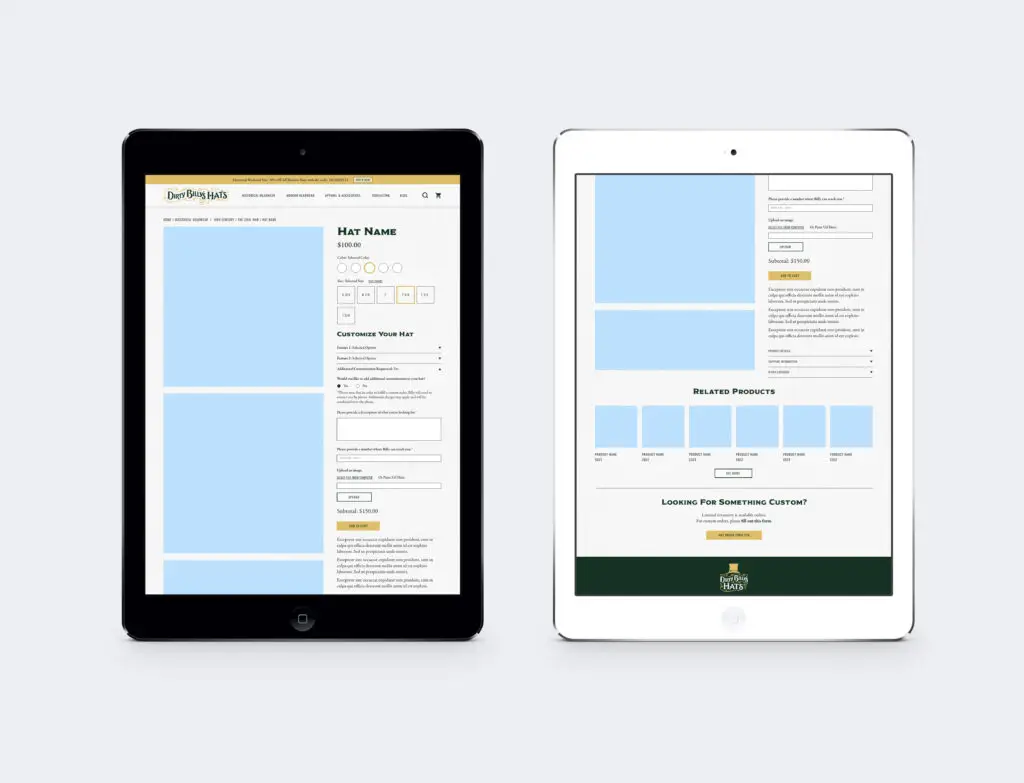
- A scalable product page template with related product suggestions and a custom order request path
- A dedicated consultation flow for historical pieces
- Category pages enabling quick inventory browsing
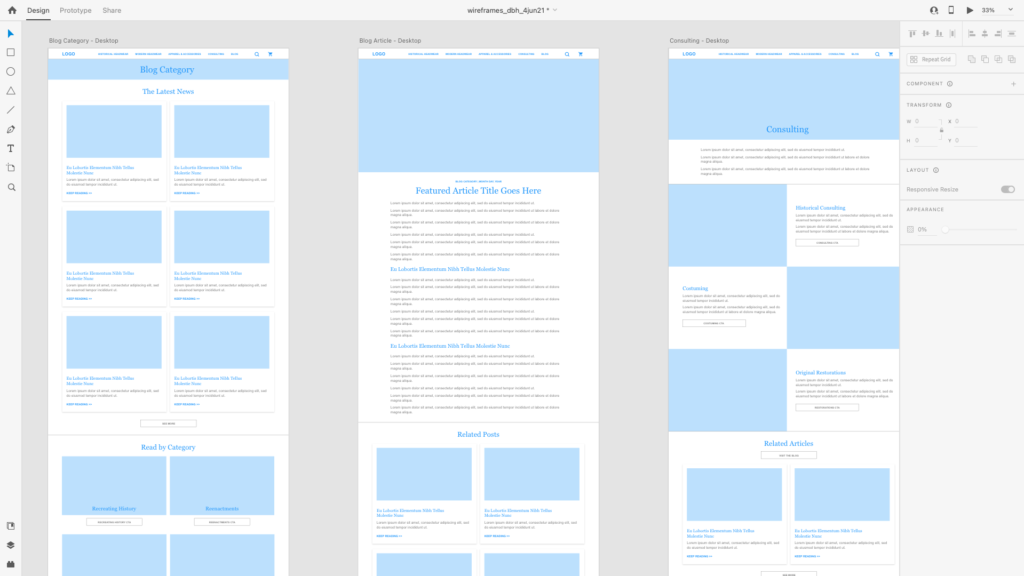
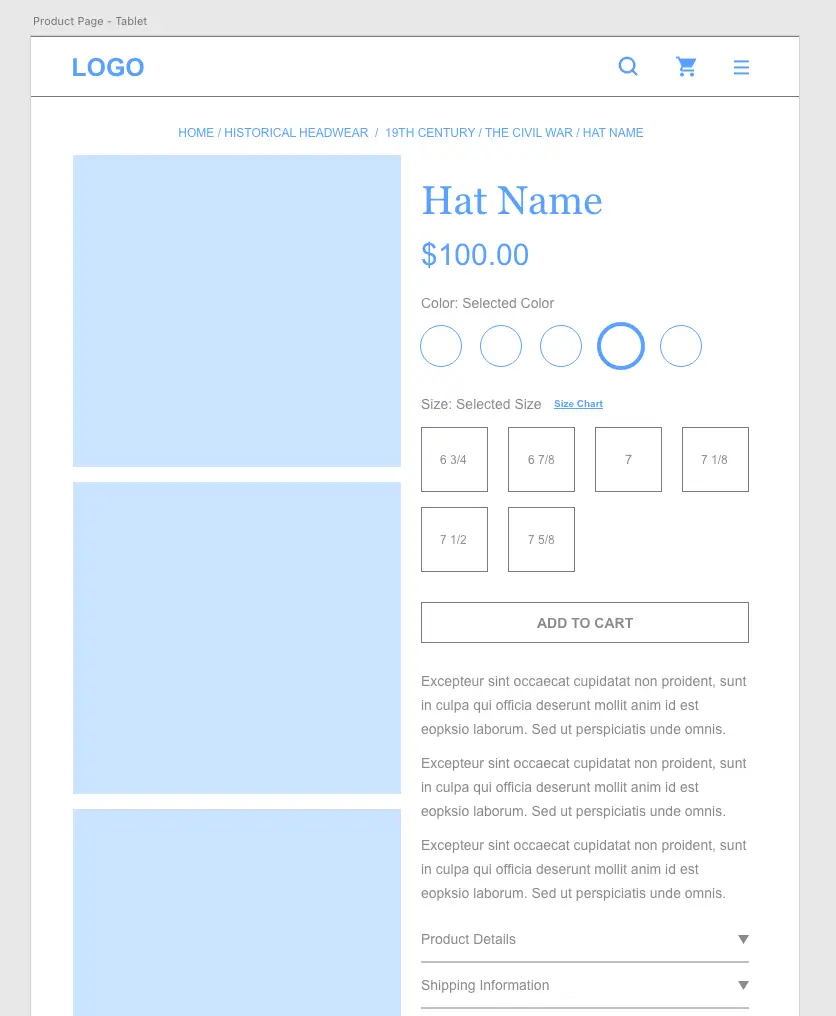
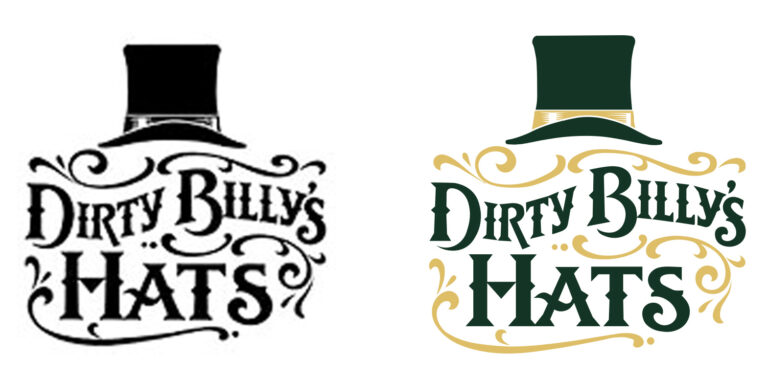
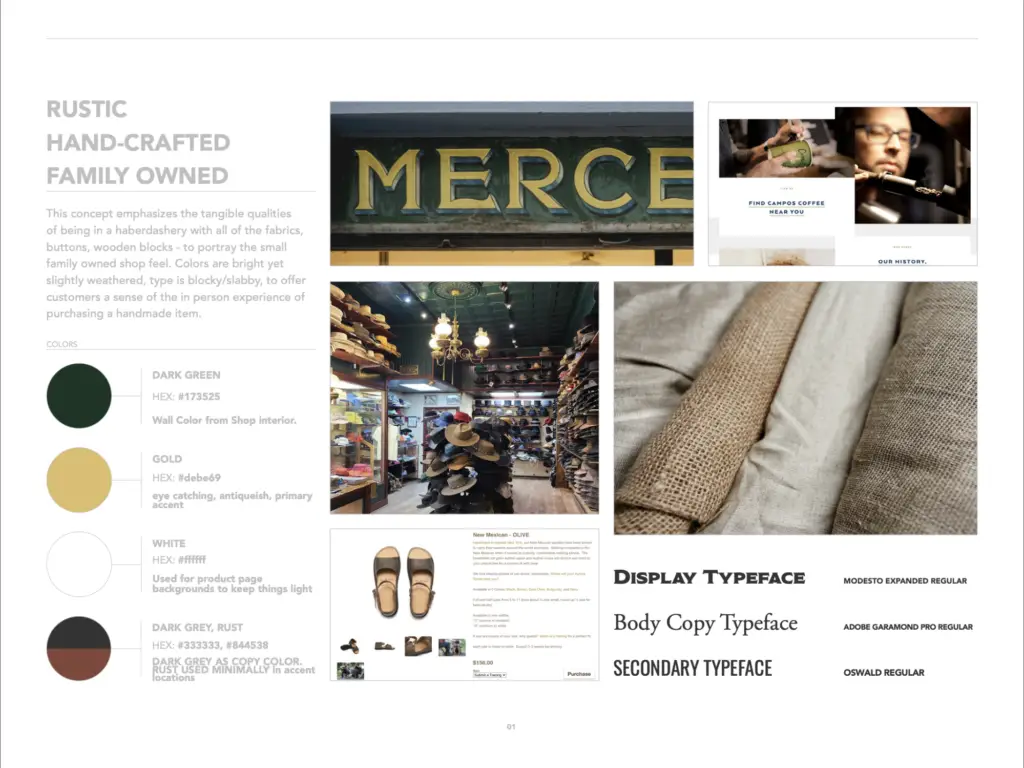
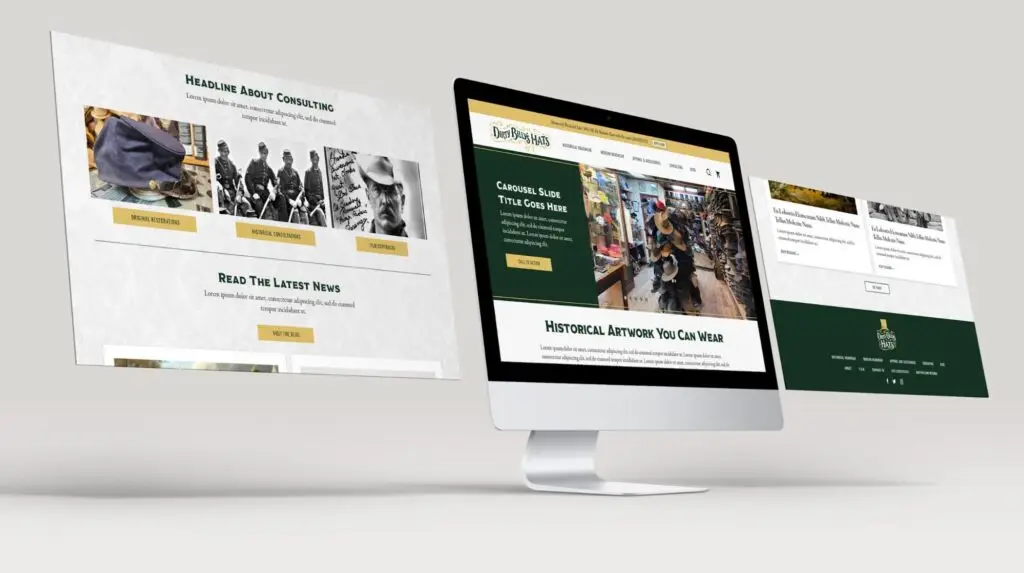
After completing wireframes I developed a series of moodboards for the owners to choose from. They selected a rustic, handcrafted aesthetic that paid homage to the historical nature of the hats and the character of their Gettysburg storefront. I then built out the full design system and hi-fidelity prototypes, and refreshed the Dirty Billy’s logo to align with the new visual direction.
Outcomes
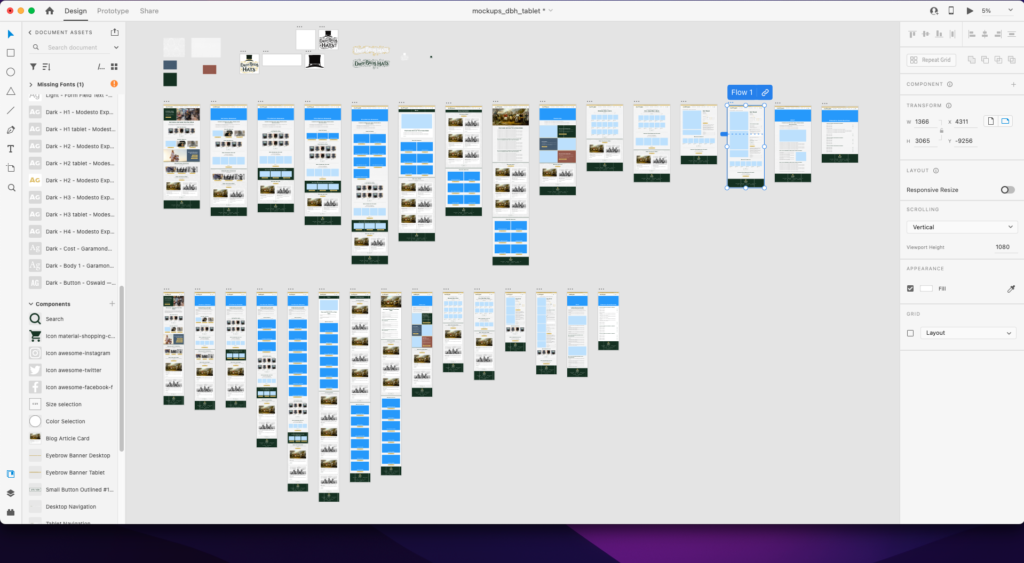
The project was completed to a fully realized hi-fi prototype stage, with a production-ready design system, logo refresh, and developer-ready handoff coordinated across a remote development team. 15 page types were designed across 3 breakpoints — including a scalable product template built to grow with the inventory — replacing a site that had previously offered customers no path to purchase beyond a phone call or Facebook message.
Takeaways
© 2025 Ariel Parzynski Design